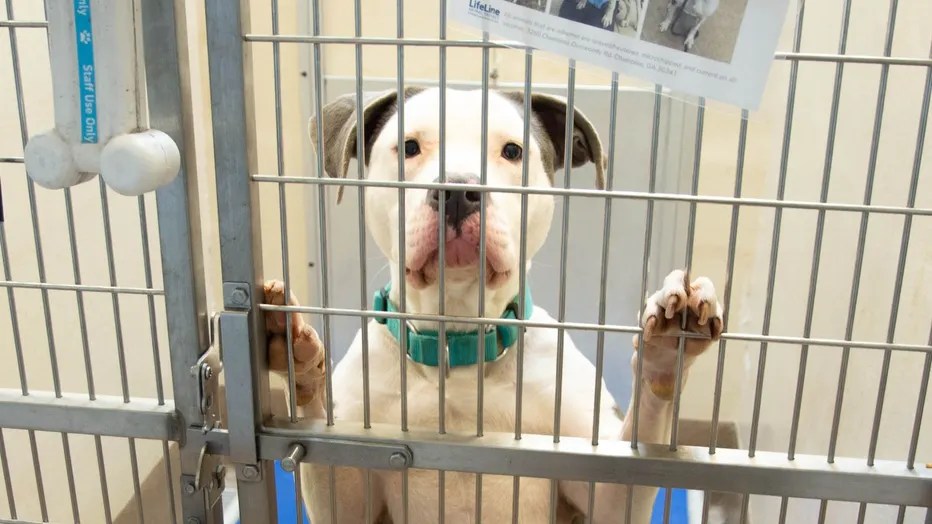
Most dog parents don’t think about federal policy when they fill a food bowl or clip on a leash. Yet across the United States, a quieter story is unfolding; one in which pets are becoming unintended victims of immigration enforcement.
When families are detained, deported, or forced to leave suddenly, pets may be left behind with little warning and no formal system in place to protect them. Increasingly, animal welfare advocates warn that these animals are becoming a form of collateral damage, their lives disrupted not by neglect, but by circumstances shaped by gaps within the systemic framework of immigration enforcement.
A Growing Pattern Shelters Can’t Ignore
Recent reporting from multiple states suggests these cases are not isolated. Shelters in Los Angeles, for example, have taken in dozens of animals after immigration raids, while some counties report that dog relinquishments have more than doubled compared with previous years. Across the country, rescues describe growing strain as pets arrive from households affected by detention, deportation, or sudden relocation driven by fear.
Even where numbers appear modest, reports caution they are likely undercounts. Most shelters do not track immigration-related intake, and families rarely have the opportunity, or sometimes the safety, to explain why a pet was left behind. As a result, many animals enter the system without their full story ever being documented.
Colliding With an Already Fragile Shelter System
These separations are unfolding against the backdrop of an animal welfare industry already under pressure. Hundreds of thousands of dogs and cats enter overcrowded shelters each year, where longer stays have become increasingly common since the pandemic. Large dogs, often the most difficult to place, face the greatest risk when space becomes limited.
Overcrowding affects far more than kennel capacity; it stretches staffing, constrains medical and behavioral resources, and can ultimately influence whether an animal leaves the shelter alive.
The Emotional Toll Behind the Numbers
Behind many intake forms is a family that never expected to say goodbye, at least not like this. What might appear as a routine surrender can instead represent a sudden rupture, unfolding faster than anyone had time to prepare for.
Shelters sometimes receive pets with brief notes referencing a “deported family,” while staff describe animals showing signs of stress or withdrawal after abrupt separation from the only home they’ve known. With little background information and few ways to reconnect pets with their owners, closure is rare.
Advocates emphasize that many people view their pets as family members. Yet fear, financial instability, and legal uncertainty can compress decision-making into minutes, leaving little opportunity to arrange care or contact relatives.
These cases challenge a long-held assumption within animal welfare: that surrender is typically a deliberate choice.
Sometimes, it isn’t. Sometimes, it reflects systemic failures beyond a family’s control.
A Policy Gap Few People Are Talking About
Perhaps the most striking takeaway is the absence of a consistent federal protocol for pets left behind after immigration arrests. In response, some cities and volunteer networks have begun creating informal safety nets, while advocates push for clearer emergency planning and policy solutions.
Until stronger systems exist, the responsibility continues to fall largely on local shelters and nonprofit organizations, many already operating at or beyond capacity.
What This Means for Dog Owners
Even if immigration enforcement feels distant from your daily life, these cases highlight a broader truth about pet ownership: a dog’s safety is often inseparable from our own stability.
Animal experts increasingly recommend creating an emergency care plan that includes:
- A trusted caregiver able to step in immediately
- Written feeding and medical instructions
- Accessible vaccination records
- Updated microchip information
- Temporary guardianship arrangements
Preparation is one of the few protections pets truly have.
The Bigger Question
When we talk about animal welfare, conversations often focus on adoption, training, or responsible ownership. But stories like these force a more complicated question:
What responsibility do communities, and the systems within them, have to protect animals when their humans suddenly cannot?
Because when families disappear overnight, their pets don’t just lose a home.
They lose their entire world.
How Communities Are Responding
Despite the strain, rescue organizations across the country are adapting by expanding foster networks, distributing emergency pet supplies, and stepping in wherever possible.
Their work reveals something enduring: even in moments of instability, compassion tends to organize itself quickly.
Moving Forward
The intersection of public policy and animal welfare rarely dominates headlines, yet its effects are visible inside shelters every day.
Whether stronger protections emerge, or the burden continues to fall on local organizations, remains uncertain.
What is clear, however, is this:
The ripple effects of systemic gaps often travel farther than we expect, sometimes reaching the dogs waiting quietly behind kennel doors.
Featured image from Fox5 Atlanta
 Social Pup Studio
Leave a comment