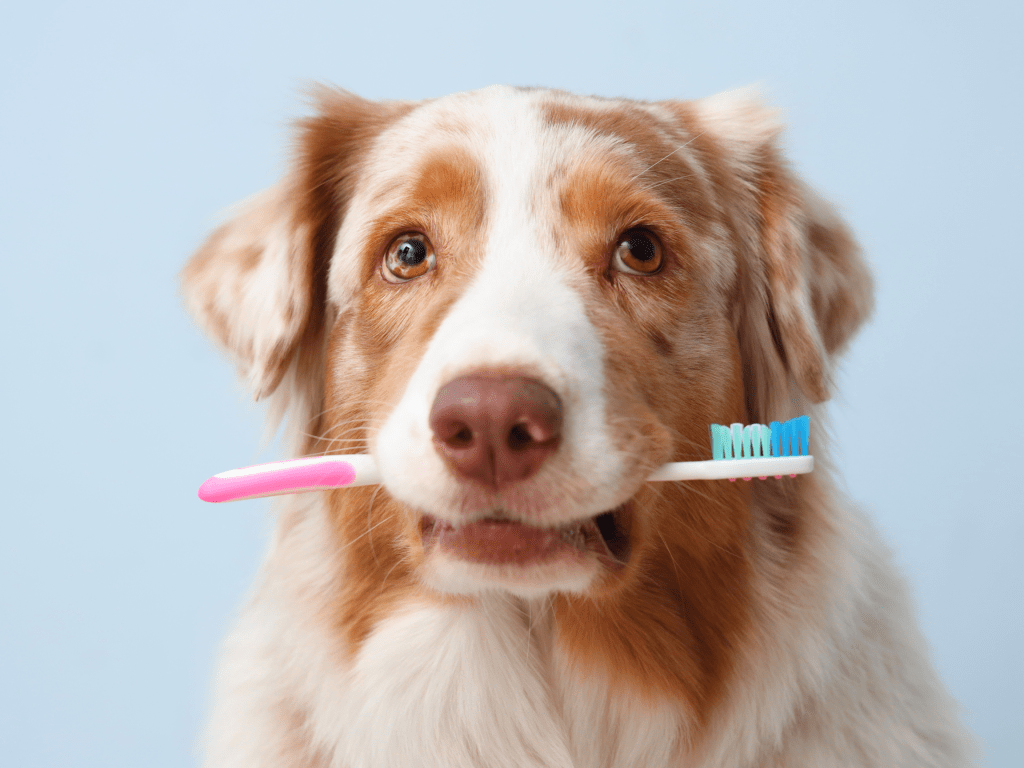
February is Pet Dental Health Month, making it an ideal time to focus on an often overlooked part of your dog’s wellness: their oral health. Dental disease affects over 80% of dogs by age three, yet it is largely preventable. Consistent at-home care can significantly reduce these risks and help keep your dog comfortable, healthy, and pain-free.
Why Dental Care Matters for Dogs
Plaque forms on your dog’s teeth daily, and when it isn’t removed, it hardens into tartar that requires professional cleaning. Left untreated, tartar buildup can lead to gum disease, tooth loss, and infections that may affect major organs.
Because dogs instinctively hide discomfort, dental disease often goes unnoticed until it has progressed. Preventive care is one of the most effective ways to protect your dog’s health while avoiding costly procedures later.
Brushing: The Most Effective Defense Against Plaque
Brushing your dog’s teeth remains the most reliable way to remove plaque before it becomes tartar. Using a dog-safe toothbrush and toothpaste helps break down buildup while neutralizing odor-causing bacteria.
For dogs hesitant about traditional brushes, finger toothbrushes offer a gentler alternative and allow for better control along the gum line. Brushing several times per week can significantly lower the risk of periodontal disease and delivers the best results when done consistently.
Water Additives for Effortless Daily Support
Dental water additives help reduce bacteria each time your dog drinks, promoting cleaner teeth and fresher breath throughout the day. Because they work continuously in the background, they offer oral health benefits without requiring additional effort from you or your dog.
Adding a dental solution such as Skout’s Honor dental water additive to your dog’s water bowl is a simple way to strengthen your overall dental strategy. While it should not replace brushing, it provides a convenient, low-maintenance layer of protection, especially for dogs resistant to hands-on care.
Dental Chews That Clean While Your Dog Chews
Chewing naturally creates friction against the teeth, helping reduce plaque while stimulating the gums. Incorporating dental chews into your dog’s routine can provide meaningful support between brushings.
Options like Pupford dental chews are specifically formulated to promote oral hygiene while remaining safe and digestible. Although they are not a substitute for brushing, they serve as an effective supplement, particularly for dogs that enjoy a daily treat or enrichment activity.
Natural Chews That Help Clean Teeth
Certain natural chews contribute to dental health by mechanically removing plaque as dogs gnaw. Their firmer texture helps reduce buildup while stimulating the gums.
Duck or chicken feet are popular choices because they are minimally processed and encourage longer chewing sessions. Natural chews work best alongside brushing and other dental tools rather than as a replacement, adding another layer of protection that supports healthier teeth over time.
Enrichment Tools That Support Dental Health
Dental chew toys encourage extended chewing sessions that help clean the teeth while keeping dogs mentally engaged. The Woof Bite n’ Brush builds on this concept with a targeted design that holds a dental treat inside the toy. As dogs chew to access the refill, built-in bristles help clean from multiple angles while supporting the gum line. By combining enrichment with mechanical cleaning, it serves as a smart addition to a comprehensive dental plan.
The Woof Fresh Breath Pupsicle Mix promotes oral health through prolonged licking, which helps reduce bacteria while supporting saliva production. When frozen inside a Pupsicle, the slow licking action naturally washes away debris and odor-causing bacteria, offering a simple way to encourage fresher breath while adding enrichment to your dog’s daily routine.
Dental Powders for a Hands-Off Approach
Dental powders are one of the simplest ways to promote oral hygiene. Sprinkled directly onto your dog’s food, they help target bacteria and reduce bad breath with minimal effort. Options such HealthyWoof dental powder and Pet Honesty Fresh Breath dental powder are formulated with quality ingredients designed to support a healthier oral environment.
For dogs that resist brushing, dental powders provide consistent, low-maintenance care and integrate easily into a well-rounded dental plan.
Breath Sprays, Oral Gels, and Teeth Wipes
For additional care between brushings, breath sprays, oral gels, and teeth wipes help maintain a cleaner mouth. Sprays like Bodhi Dog breath spray target odor-causing bacteria, while oral gels such as Skout’s Honor oral gel help support gum health. Teeth wipes provide gentle mechanical cleaning by removing plaque from the tooth surface and are often better tolerated by dogs that resist brushing.
These tools are most effective when used alongside, not in place of, your primary dental habits.
Supporting Dental Health from the Inside Out
Oral health extends beyond the surface of your dog’s teeth. Bad breath and bacterial imbalance often begin in the gut, where digestive issues can contribute to odor and inflammation that appear in the mouth.
Products that support gut health can play a valuable role in dental wellness. Options like Native Pet Gut Well Clean Breath are formulated to promote digestive balance while supporting oral freshness, helping address odor at its source rather than masking it. Adding a daily canine probiotic may further encourage a balanced microbiome, which helps regulate odor-causing bacteria and contributes to healthier gums.
Inside-out care is most effective when paired with mechanical cleaning like brushing and chewing, but it can be especially beneficial for dogs with chronic bad breath or sensitive stomachs.
Don’t Skip Professional Dental Cleanings
Even with a strong at-home approach, professional dental cleanings remain essential for protecting your dog’s oral health. Veterinary cleanings remove hardened tartar that cannot be addressed through brushing or chews alone and allow your veterinarian to evaluate the teeth and gums for early signs of disease.
Most dogs benefit from periodic cleanings, though the recommended frequency varies based on breed, age, genetics, and current dental health. Think of professional care as the foundation of dental wellness, with at-home maintenance extending those benefits between visits.
Build a Routine You Can Stick To
The most effective dental plan is one you can maintain consistently. Combining brushing with supportive tools like powders, water additives, and functional chews helps protect your dog’s teeth from multiple angles.
Regular veterinary exams remain essential, but daily at-home care has the greatest impact on prevention. Pet Dental Health Month serves as a strong reminder that small habits add up, and even one new addition to your dog’s routine can meaningfully improve their long-term health.
A healthy mouth plays a major role in your dog’s overall wellbeing, making dental care one of the most impactful investments you can make in their long-term health.
 Social Pup Studio
Leave a comment